


Embracing the Spirit of Ramadan Safely: A Doctor’s Guide to Managing Diabetes
admin
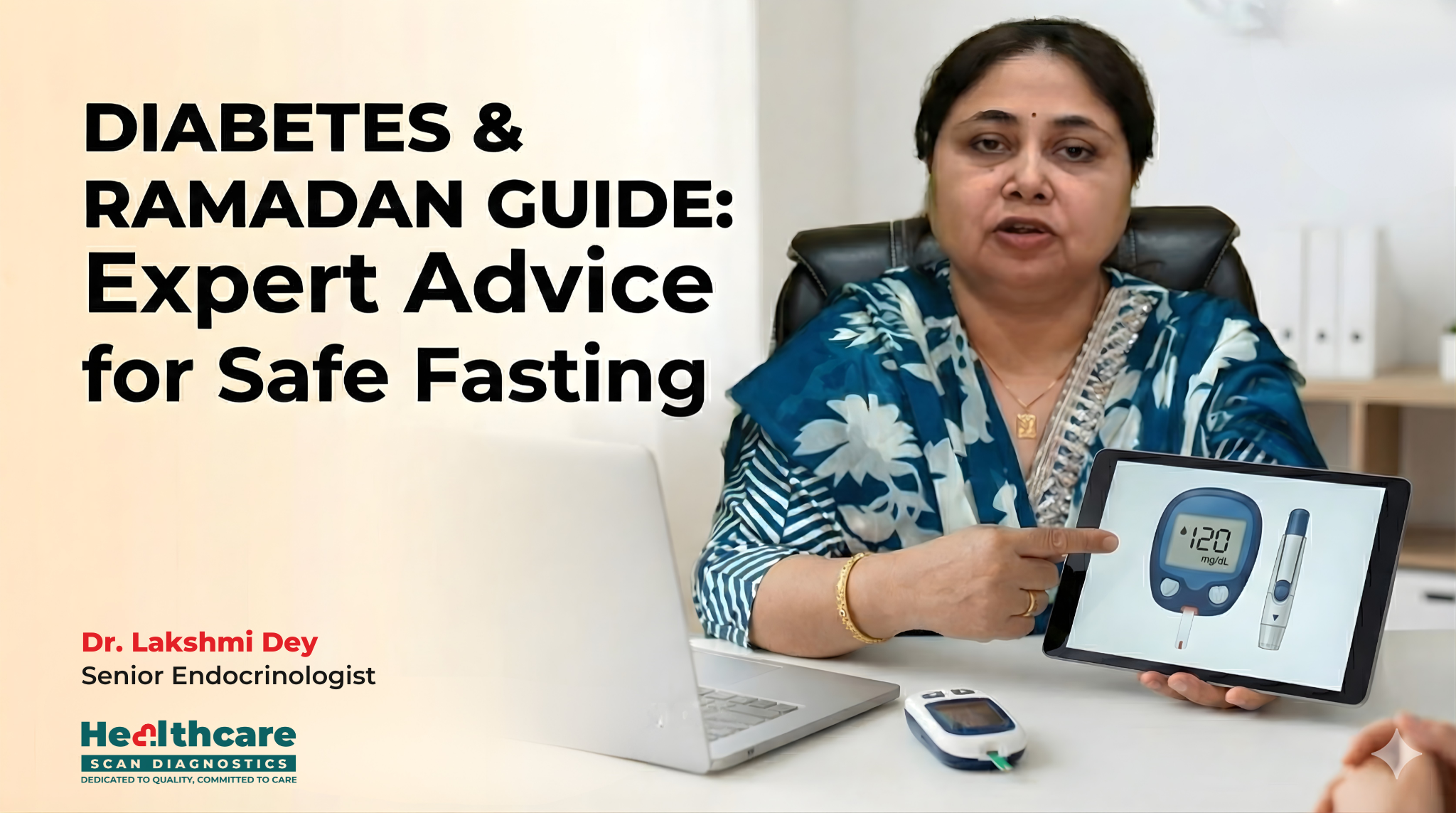
By Dr. Lakshmi Dey, MD, DM (Endocrinology), Senior Endocrinologist, Healthcare Scan Diagnostics
Ramadan is a sacred month of reflection, discipline and devotion. For many people living with diabetes, the wish to observe the fast is deeply meaningful. As physicians, our foremost responsibility is to ensure that your spiritual journey does not compromise your health.
Islamic teachings emphasize compassion and preservation of health, granting exemptions from fasting when illness poses a risk. With the right planning and medical guidance, many people with diabetes can observe Ramadan safely, while others should refrain for their own protection.
Key takeaways
- See your doctor 6-8 weeks before Ramadan for a risk assessment.
- High-risk groups are strongly discouraged from fasting.
- Never change your medicines on your own.
- Checking blood sugar does not break the fast.
- Break the fast if blood sugar is below 70 mg/dL or above 300 mg/dL, or if you feel unwell.
1. Pre-Ramadan medical consultation (6-8 weeks before)
A safe Ramadan begins well before the first fast. Anyone with diabetes who plans to fast should consult their doctor 6-8 weeks in advance. During this visit, the doctor assesses risk using the internationally accepted IDF-DAR guidelines.
Low risk: well-controlled diabetes, managed with lifestyle measures or simple oral medications.
High or very high risk: type 1 diabetes, poorly controlled blood sugar, recent severe hypoglycemia or diabetic ketoacidosis (DKA), pregnancy, and complications such as chronic kidney disease.
If you are in the high-risk category, fasting is strongly discouraged, as it may lead to serious or life-threatening complications.
2. Optimizing your medications
Never change your medicines on your own during Ramadan. Because meal timing and metabolism change during fasting:
- Dose adjustments may be required.
- Some drugs (for example, long-acting sulfonylureas) may need to be stopped or replaced.
- Premix insulin doses are often reduced significantly.
- Medicines such as metformin or DPP-4 inhibitors may continue, with timing aligned to Sahari (the pre-dawn meal) and Iftar (the meal that breaks the fast).
Medication planning should always be personalized and supervised by your doctor.
3. Regular blood sugar monitoring
A common myth is that checking blood sugar breaks the fast. This is not true. Regular monitoring is essential to prevent emergencies. Check your blood glucose as per your doctor’s advice and whenever you feel unwell.
4. Nutrition strategies for Sahari and Iftar
Never skip Sahari. Skipping the pre-dawn meal is one of the most common and dangerous mistakes, often leading to mid-morning hypoglycemia.
Smart Sahari choices: complex carbohydrates such as oats, dalia and multigrain roti, together with protein and fiber such as lentils, eggs and lean meats. Slow-digesting meals provide sustained energy.
Healthy Iftar practices: break the fast with 1-2 dates and water, avoid immediately overloading on fried or sugary foods, and eat slowly to prevent sugar spikes and indigestion.
Hydration: drink plenty of water or sugar-free fluids between Iftar and Sahari, and avoid carbonated drinks and fruit juices.
5. When to break the fast: warning signs
Your health comes first. Break your fast immediately if:
- Blood sugar falls below 70 mg/dL
- Blood sugar rises above 300 mg/dL
- You have sweating, shaking or palpitations
- You feel dizzy, confused or extremely weak
Do not wait for Iftar if you feel unwell. Prompt treatment can prevent hospitalization and serious complications.
Final thoughts
Fasting is an act of faith, but caring for your health is a responsibility. With advance planning, medical supervision and sensible choices, many people with diabetes can experience a spiritually fulfilling and medically safe Ramadan. For others, choosing not to fast is not a failure of faith; it is an act of wisdom and self-care.
We wish you and your family a blessed, peaceful and healthy Ramadan.
Frequently asked questions
When should someone with diabetes see a doctor before Ramadan?
Anyone with diabetes who plans to fast should consult their doctor 6-8 weeks in advance.
Does checking blood sugar break the fast?
No. This is a myth. Regular monitoring is essential to prevent emergencies.
Can I change my diabetes medicines myself during Ramadan?
No. Doses and timing may need adjusting, and the plan should be personalized and supervised by your doctor.
What should I eat at Sahari and Iftar if I have diabetes?
Never skip Sahari. Choose complex carbohydrates with protein and fiber, break the fast with 1-2 dates and water, and avoid carbonated drinks and fruit juices.
When should I break my fast?
If blood sugar falls below 70 mg/dL or rises above 300 mg/dL, or if you have sweating, shaking, palpitations, dizziness, confusion or extreme weakness.
This article is general information and does not replace personal medical advice. People with diabetes should consult their own doctor before fasting.
For a personalized risk assessment and pre-Ramadan evaluation, book an appointment with Healthcare Scan Diagnostics or call +91 78900 11555. You can also watch our expert discussion on our YouTube channel; the video is also available in Hindi and Bangla.
📍 For personalized risk assessment and pre-Ramadan evaluation, visit Healthcare Scan Diagnostics.
▶️ Watch our full expert panel discussion on Diabetes and Ramadan to learn more. (Visit our You tube channel - Video also available in Hindi and Bangla)